Your Followers Aren't Seeing Your Content — And Nobody's Going to Tell You
You built the audience. You posted the content. You did everything right.
Except the rules changed while you were working.
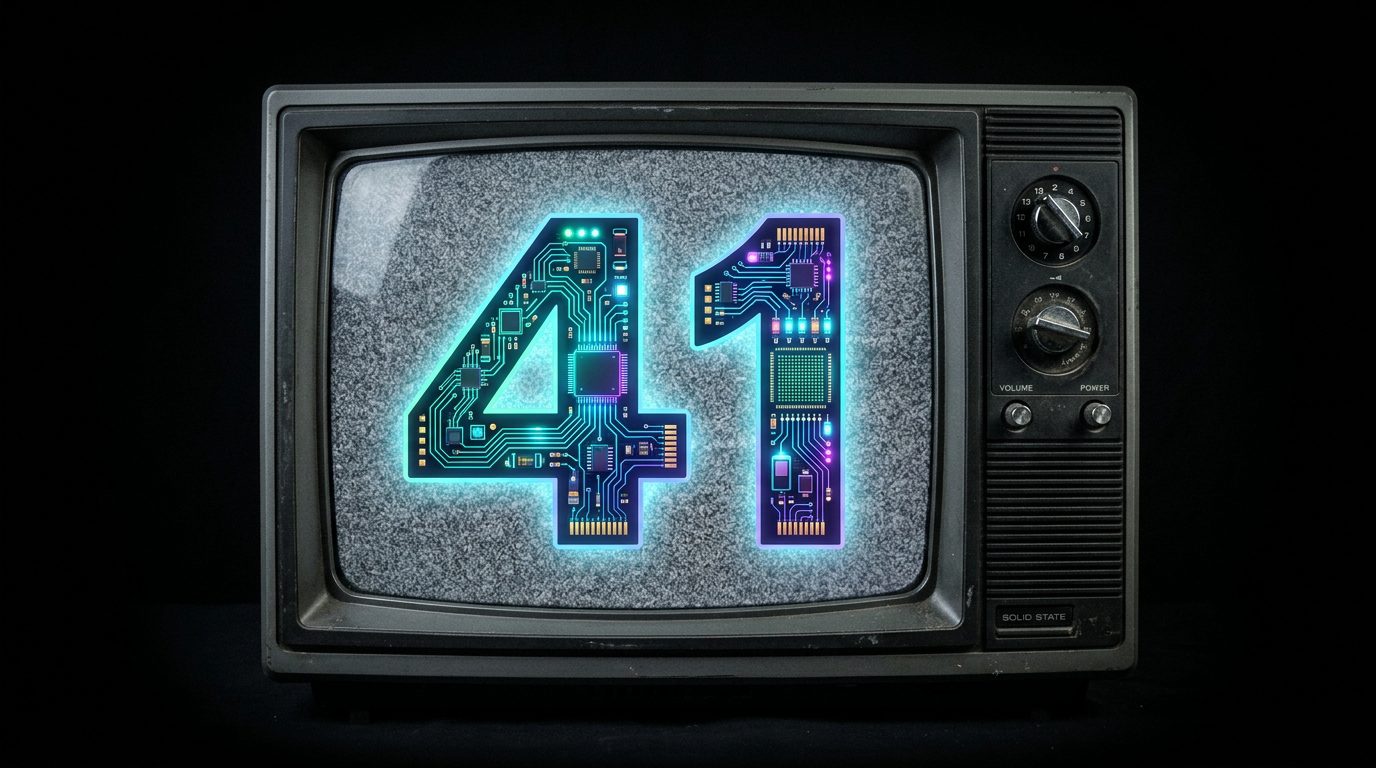
41 People
Here's a number worth sitting with.
A post went up in a Facebook Group. Topic: how companies are misjudging how many people actually see their content. The post used the @Everyone tag — the feature that, by name, notifies every member of the group.
41 people saw it.
Not 4,100. Not 410. Forty-one.
A post about shrinking reach, tagged @Everyone, reached 41 people. If you needed a demonstration, the platform provided one.
That's not a fluke. That's a pattern. And once you know what to look for, you start seeing it everywhere.
The Vanity Metric You're Probably Tracking
Let's look at a concrete example.
ColDesi is a well-established equipment company — in business since 1978, over 21,000 entrepreneurs served by their own account, a YouTube channel with 53,100 subscribers and more than 1,700 published videos. This is a company doing everything the conventional marketing playbook recommends. Consistent content. Educational material. Real investment in production over many years.
Here's what that looked like on YouTube in May 2026:
A video posted 17 hours earlier had 52 views. That's a reach rate of 0.09% — less than one-tenth of one percent of the people who specifically asked to see their content.
This isn't a shot at ColDesi. The point is that old method stopped working — and the numbers are hiding it in plain sight. Subscriber counts keep climbing. Views on recent uploads tell a completely different story.
The subscriber count is a vanity metric. Reach is the real number. And reach has quietly collapsed.
Three Platforms. Three Contractions. Zero Announcements.
This didn't happen in one place. It happened everywhere, at roughly the same time, with no public explanation from any of the platforms involved.
YouTube used to send email notifications every time a subscribed channel uploaded. The algorithm now decides which subscribers see which videos — based on engagement signals that creators don't control. The subscription still exists. Whether it delivers content is another question.
Facebook still has the @Everyone feature. The name implies what it does. The reach data implies something else. Organic reach for Pages and Groups has contracted from 30-40% to 2-5% for most accounts. The feature didn't go away. It just stopped doing what it says.
Email was supposed to be the one channel you actually owned. You built the list, you sent the message, it landed in the inbox. Then Gmail introduced the Promotions tab. Now the majority of marketing email routes away from the primary inbox — lower open rates, less interaction, no opt-in from the sender, no notification it happened.
Three channels. Three quiet contractions. No press releases. No apologies. Just gradually declining numbers that most companies attributed to content quality, posting frequency, or bad luck.
The Three Responses — And Why They All Hit the Same Wall
When organic reach started declining, companies responded in predictable ways.
More content. If the algorithm wasn't rewarding you, the instinct was to produce more. Better thumbnails. Better titles. Post more frequently. For some creators this worked temporarily. For most it produced the same reach at higher cost. 1,700 videos and 52 views isn't a content quality problem. It's a distribution problem.
Outsource it. Companies with agency relationships and paid ad budgets largely didn't feel this shift — because they were already buying reach. Paid campaigns kept running. The organic collapse happened around them, not to them. The lesson some drew from this: paying for reach is the only reliable option. That may be partially true. It's an expensive conclusion to arrive at after years of building an audience you assumed you still had.
Use influencers. If your own organic reach was declining, find someone whose wasn't. The influencer model made sense: an independent creator, a warm audience that trusted them, access without fighting the algorithm directly. And it worked. For a while.
Global influencer marketing was a $1.7 billion industry in 2016. By 2025 it hit an estimated $32.55 billion. In the US alone, brands spent $9.3 billion on influencer partnerships in 2025, with projections of $12.17 billion in 2026. This is not experimental budget. This is mainstream marketing infrastructure.
But there's a problem the spend numbers don't show.
The Authenticity Paradox
Every piece of research on influencer marketing says the same thing: audiences want honest, genuine, unbiased content from someone who actually cares about what they're recommending. 88% consider it critical that influencers genuinely believe in what they're promoting. 80% cite lack of transparency as their primary reason for distrusting a creator.
The industry heard this. Every benchmark report, every conference keynote, every agency playbook in 2025 and 2026 includes the word authenticity. The entire model is organized around the premise that influencer content works because it feels real.
Now look at what the contracts actually require.
As influencer marketing has matured, the agreements have gotten increasingly structured: content approval rights, mandatory talking points, restrictions on mentioning competitors, pre-publication review, prohibited language clauses. These are reasonable business protections. A company spending real money has legitimate interest in how its product gets represented.
But they produce a specific and unavoidable outcome.
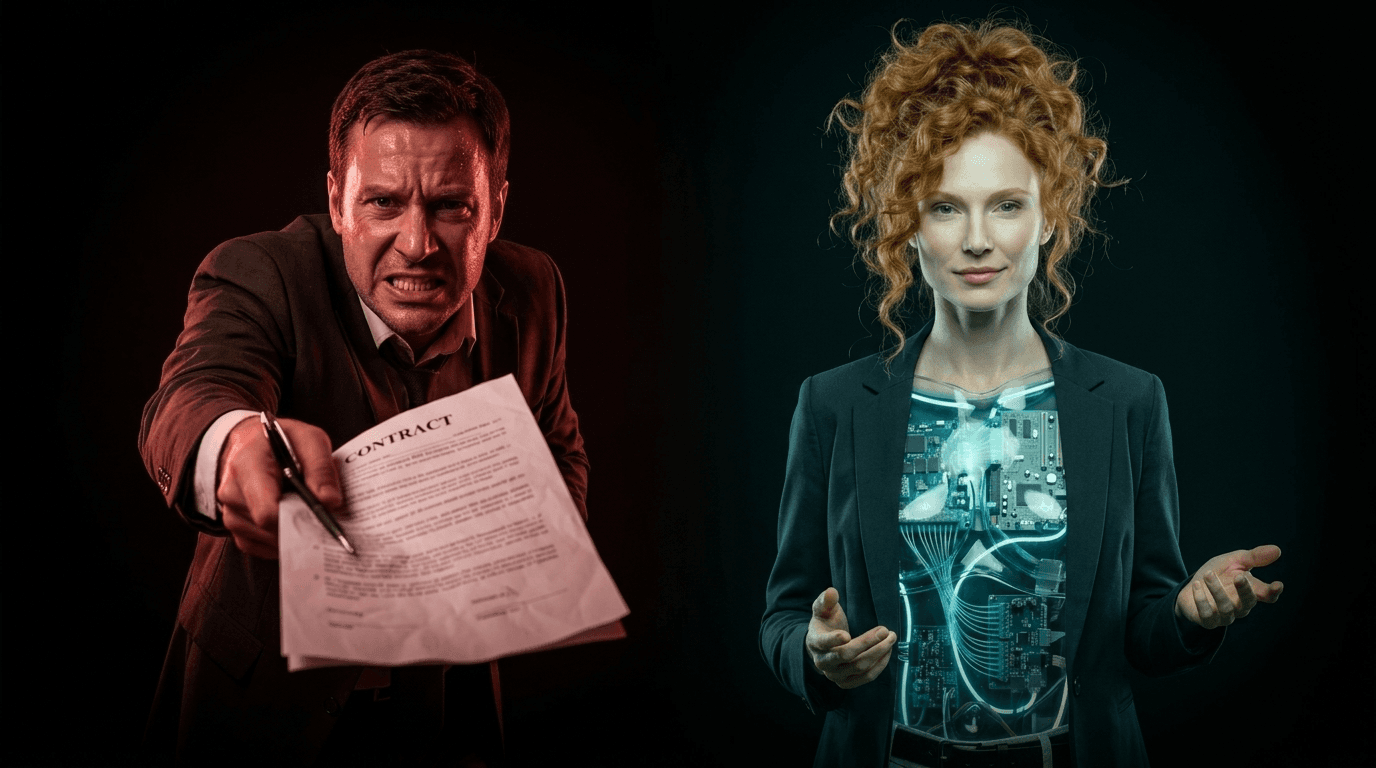
When a contract controls what can be said, when it can be said, how it must be framed, and what cannot be mentioned — the person delivering that content is no longer a real user sharing an honest opinion. They're a performer following an approved script.
The audience that built a relationship with that creator based on trust is now receiving content that was reviewed and shaped by the brand being promoted. And audiences in 2026 have gotten very good at identifying it on sight.
There's also the compliance problem. Affiliate links and FTC disclosures — #ad, #sponsored, spoken acknowledgments — are legally required in most markets. But the platforms have learned to read them as commercial signals, and increasingly treat disclosed sponsored content the same way they treat paid advertising: with reduced organic distribution.
Disclose the deal and the algorithm throttles it. Don't disclose and a regulator shows up. The influencer model has been squeezed from both ends.
What This Is Really About
Every one of these failed strategies has something in common: a company trying to reach an audience through a channel they either don't control or have compromised through a financial relationship.
The in-house content is produced by the company selling the product. The agency content is designed to drive paid conversions. The influencer content was approved by the brand before it published.
In every case, the audience is left asking the same question: Is this person telling me this because it's true, or because they have a reason to say it?
Audiences have always asked that question. What's changed is how quickly they arrive at the answer — and how thoroughly the algorithms flag content that triggers it.
Here's the irony. As the influencer economy has industrialized and authentic independent voice has gotten scarcer, it has simultaneously gotten more valuable. When an audience encounters a review with no affiliate link, no disclosure, no sponsor mention, no contractual obligation — they notice. Because it's become unusual.
The most valuable marketing asset in any market is an opinion that can't be bought. The more the influencer model scales, the rarer that asset becomes. And the rarer it becomes, the more it's worth to the few sources that still have it.
What's Actually Happening — A Theory
Here's one explanation for why all of these things moved in the same direction at roughly the same time.
Before AI tools became widely accessible, content creation required real investment. A video took time to film, edit, and publish. A newsletter took time to write. Platforms had an incentive to reward creators with organic reach — because content was relatively scarce and creators needed a reason to keep producing it.
AI changed that equation completely. Scripts, voiceovers, blog posts, social captions — generatable in minutes. The volume of content being uploaded to every platform accelerated dramatically.
Now consider the platform's position. They've always preferred that companies pay for reach rather than receive it free. For years, free organic distribution was a necessary incentive — a reason for creators to invest in content that kept users on the platform. When AI made content creation essentially free, that incentive became structurally less necessary.
Theory: As AI lowered the cost of content creation to near zero, the major platforms reduced organic reach — effectively converting what had been free distribution into a paid advertising product. No announcement was made because none was required.
This can't be proven from the outside. Platform algorithms are proprietary. But the observable evidence points consistently in one direction: three major distribution channels contracting simultaneously, during the same period, without public explanation.
Companies already paying for ads felt almost none of it. Companies relying on organic distribution felt all of it.
The Part That's Hard to See
What makes this shift genuinely difficult to respond to is how invisible it is on the surface.
A company posting to its YouTube channel in 2026 is using the same tool it used in 2019. The upload process is identical. The subscriber count is larger. The view counts are a fraction of what they were. Nothing on the interface indicates that the underlying distribution model has fundamentally changed.
The previous transitions in marketing history were visible. Print to broadcast. Broadcast to search. Search to social. A new medium appeared and companies could see it happening. This one didn't announce itself. The channels remained. The interfaces look the same. The subscriber counts kept growing. The reach quietly disappeared.
You can't solve a problem you haven't clearly identified. And the problem — based on what's observable right now — is not a content quality problem. It's not a posting frequency problem.
It's a distribution problem.
The channels most businesses have been counting on to carry their content to their audiences have fundamentally changed how they operate. Recognizing that is the first step. The companies paying attention now won't be surprised when the ground shifts further. The ones that aren't will feel it like an earthquake.