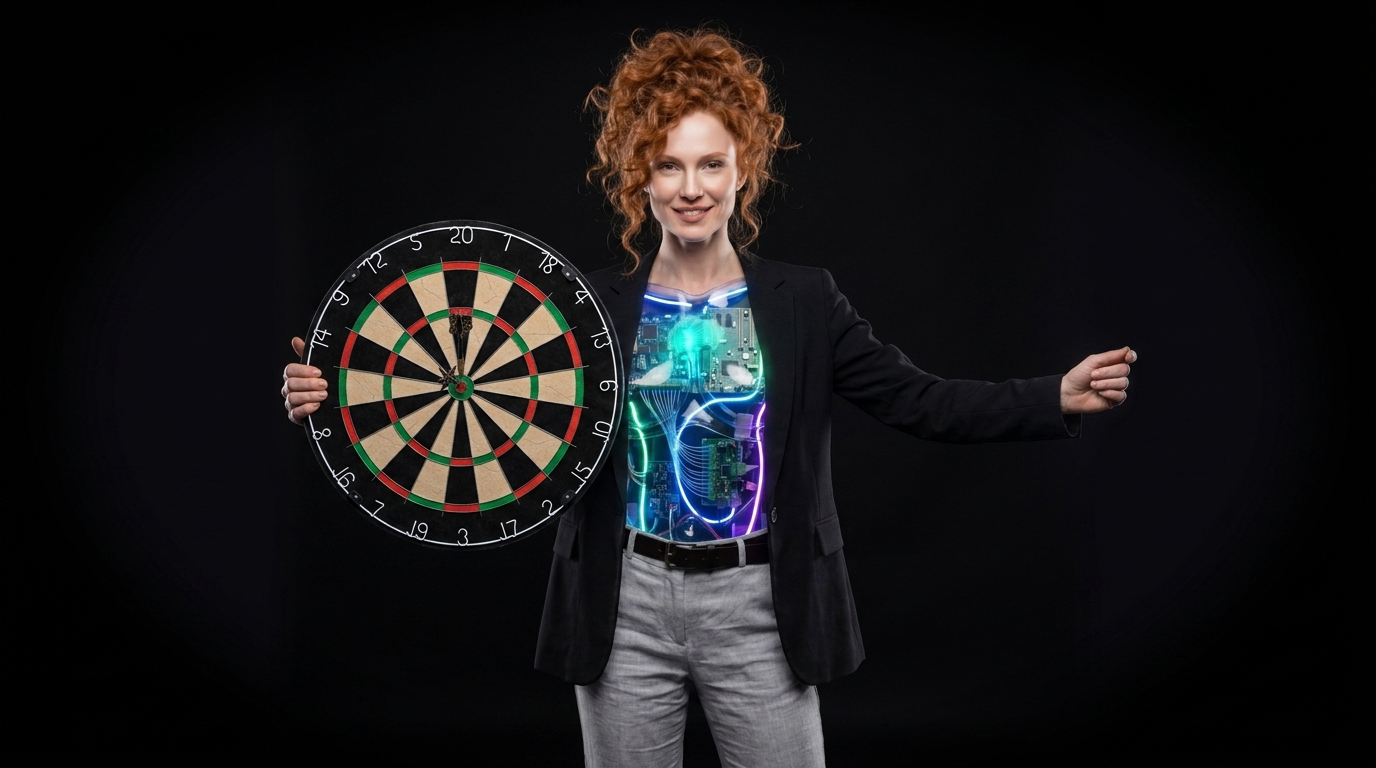
Pull up the last advertisement your company ran.
Look at it honestly. Now answer one question: who, exactly, is that for? If your answer sounds anything like "anyone who needs our product" or "small businesses of all types" or — our personal favorite — "really anyone" — you have just identified the single most expensive habit in marketing. And you are in outstanding company. The majority of businesses running ads right now are doing the exact same thing. Spending real money to say nothing in particular to nobody specific. The professionals figured this out a long time ago. Your customer is not everyone. Your customer is a very specific person at a very specific moment in their life — the moment they are entering your market for the first time. If you are not speaking to that person, in that moment, where they actually live — you are not advertising. You are just making noise.
The Shotgun Problem
Ask most business owners who their target customer is and they will describe the person who already bought from them. Then they go run ads aimed at that same profile. Which is roughly equivalent to a grocery store advertising to people who already ate lunch. Here is the reality nobody wants to say out loud: the person who already owns your product is not your customer. Not anymore.
Your customer is the person who is about to need what you sell and does not know you exist yet. That is a very different person in a very different place, and reaching them requires going somewhere most advertisers never bother to look. The smart real estate agent figured this out decades ago. First-time homebuyers do not live in houses — they live in apartments. They are paying someone else's mortgage every month and the frustration of that is building. So the agent who is actually closing deals is not mailing homeowners. That agent is walking into apartment leasing offices, pinning flyers on community boards, and showing up exactly where the future buyer lives right now — before they become a buyer. That is not luck. That is a targeting decision.
The Brilliant Engineer Who Couldn't Read the Data
[PHOTO MARKER — See Visual Brief, Image 2] Let's talk about a real situation. A company with a product in the $5,000 range ran a short video through a YouTube influencer. The video pulled 110,000 views. Three thousand people clicked through to learn more — voluntarily, on their own, because something about that product caught their attention enough to act. The salesman looked at the results. No immediate conversions. He called it a failure and moved on. Let that sit for a moment.
Three thousand people self-identified as interested in a $5,000 product. They did not stumble there by accident. They watched, they decided the product was worth their time, and they clicked. At full conversion that list represents fifteen million dollars in potential revenue. And the salesman saw no value in it because nobody bought on day one. Was he foolish or stupid? Honestly — stupid. Foolish implies he didn't know better. Stupid means he had the answer in his hands, didn't recognize it, and threw it away. Those are different problems with different price tags. Here is the important context though — and this matters, because the article is not about mocking this man. Inventors and engineers are not marketing experts.
The same creative mind that builds the products that move our world forward is wired to think in proof and completion. A sale is proof. No sale is incomplete. So the engineer looks at three thousand clicks with zero same-day conversions and his brain files it exactly as it was trained to: experiment failed, move on. He is not wrong in his own domain. He just does not know he left it. And nobody pulled him aside to explain what he was actually looking at.
YouTube Is Losing Organic Reach.
It Is Gaining Something Better. The influencer market is changing. Organic reach is compressing. The days of a single video going viral and changing a business overnight are not gone but they are rarer. What has not changed — what has actually gotten better — is the data sitting underneath every one of those views. The professional marketers who figured out the influencer space are not using it as a broadcast channel. They are using it as a targeting engine.
The play looks like this: the influencer creates genuine interest and drives traffic. That traffic lands on a data-rich landing page designed to capture the prospect — name, email, behavior, intent. From that moment forward, the prospect is in a system. They can be remarketed to. They can be nurtured. They can be followed up with until they are ready to act. Those 3,000 clicks were not a failed conversion. They were the beginning of a list. A list that, with a functioning follow-up system, becomes a pipeline. The influencer did their job perfectly. The system on the other end just was not there.
One Ad Is Not a Strategy. It Is a Lottery Ticket.
[PHOTO MARKER — See Visual Brief, Image 3]
Even when companies find the right target and drive real traffic, they almost universally make the same second mistake. They run the campaign once. Nothing converts immediately. They conclude it did not work. What actually did not work was their understanding of how human beings make purchasing decisions. Research from Abstrakt Marketing Group puts the baseline at 6 to 8 meaningful touchpoints before a standard sale converts. For high-ticket items — the $5,000 and above range — marketing expert Dr. Jeffrey Lant's framework is direct about it: Impulse buy: 1 touchpoint. Under $100: 2 to 4. Over $100: 5 to 7. High ticket: 9 to 12 minimum. Data from HockeyStack shows that for B2B deals above $100,000, the full customer journey can involve upward of 400 touchpoints before a commitment is made.
Nobody buys expensive things on first exposure.
They buy after they have been watching you long enough to trust you. By the time they call, the decision is already made. You just were not tracking the journey. The professionals in every high-ticket industry have a word for this process. In real estate they call it farming — cultivating a territory of prospects over time, showing up consistently, adding value in small doses, staying visible. The framework underneath it has not changed in a hundred years of professional selling: Interest. Research. Delivery and Client Commitment. Interest is the first exposure — the ad, the video, the referral. Research is the quiet middle period where the prospect is learning about you, comparing alternatives, deciding whether you are credible.
Delivery and Commitment is when they raise their hand — and if you have done the first two stages well, most of the selling is already finished by the time they contact you. The company that runs one ad and wonders why the phone is not ringing only showed up for stage one. They never built the farm.
The Partner Nobody Thought to Call
[PHOTO MARKER — See Visual Brief, Image 4]
There is one more piece the professionals know that the amateurs consistently miss. You do not have to build the entire pipeline alone — because in almost every high-ticket industry, there is another business out there that is already in contact with your future customer. Go back to real estate. Almost one hundred percent of first-time homebuyers need a mortgage. They cannot buy without financing. And the mortgage lender cannot sell a home. These are two businesses that literally cannot function without each other — and the smart ones figured out they should stop pretending otherwise. The lender runs ads to help renters become homeowners. The realtor closes the deal. They share the prospect, they share the relationship, and they both win from a customer neither could have fully served alone.
Every industry has this relationship hiding in plain sight. The question is whether you have found yours. Who is already talking to the person who is about to need your product? Who do they trust before they trust you? Who benefits when your customer succeeds? That is your partner. And that partnership — properly structured — is worth more than any single ad campaign you will ever run.
So Here Is the Question. If you want to build a business that converts on the first click, we would genuinely suggest sex, drugs, or rock and roll. Those markets have impulse buying down to a science. But if you are selling something expensive — something that requires trust, research, and a real decision — then you may want to think about this differently. Establish your target with precision. Go where they actually live before they become a buyer. Drive them to a landing page that captures their interest and gives you the ability to follow up. Cultivate that list with remarketing that delivers real value at every touch. And find the partners who are already in conversation with the people investigating your industry.
The data is there. The tools are there. The only thing missing in most cases is the decision to stop shot gunning and start farming. The crop does not come in on day one. But the farmer who tends it every season is the one who eats